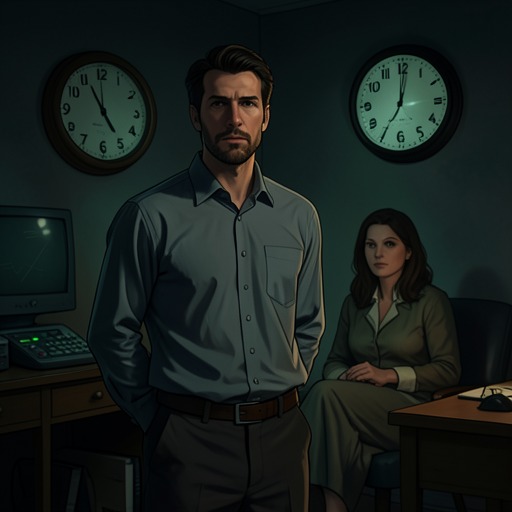
Kemal’s emotional paralysis
The Museum of InnocenceKemal’s emotional paralysis is the bodily and verbal expression of a life suspended by his obsessive love for Füsun. He repeatedly finds himself unable to rise from a chair or speak when the gap between what he hopes she feels and what she actually shows becomes unbearable. Yet the paralysis does not simply keep him away: it helps bind him to the Keskin household, where he returns again and again, and it makes a later moment of mutual understanding feel like a sudden release.
The recurring inability to leave
The pattern becomes unmistakable after an evening at the Keskin home when Kemal gathers his strength, leaves late, and resolves never to visit again. At home he drinks himself into oblivion. Ten days later, however, he rings the Keskin doorbell as if nothing has happened. When his eyes meet Füsun’s, he reads the shine in them as happiness at seeing him; the look restores him to a state of overwhelming joy. His departure and return expose the cycle at the heart of his paralysis: indignation briefly promises escape, but a glance from Füsun draws him back.
The dinners that follow offer genuine pleasure. Sitting at the table, watching television with Tarık and Nesibe the seamstress, and joining the family’s casual conversation, Kemal feels that he is creating a new family for himself. These evenings lift his spirits and can make him almost forget the sorrow that brought him there. But their comfort also sustains his suspension. A chance meeting of eyes can abruptly awaken his memory of his undying love, and he imagines that Füsun, too, might recover their former happiness, leave her husband, and marry him. When he sees no such recognition in her expression, hope collapses into dejection so complete that he cannot rise from his chair.
Kemal’s account distinguishes the emotional refuge of the dinners from the future he wants them to promise. Füsun can appear absorbed by television or neighborhood gossip, as though her life has found its fulfillment at her parents’ table. For Kemal, that appearance marks the end of his own imagined quest: he sees no shared future and no sign that she will leave her husband. His inability to get up makes this inward impasse visible, while his repeated return keeps it in motion rather than resolving it.
A stalemate made public
During the years when their film plans remain in limbo, the dinners become more than a private consolation. Kemal recalls that Füsun has not become a star and that he has not drawn closer to her; their situation has become a public disgrace, and both have been humiliated. He sees the same immobility in their routine: as long as they continue meeting four or five times a week, neither can begin a new life, a fact he says they both understand. The visits comfort him, but their frequency also perpetuates the condition from which neither seems able to move on.
The paralysis is therefore not only a momentary response to disappointment. It is a structure of repetition: Kemal continues to attend, continues to watch for signs that Füsun remembers their past happiness, and continues to depend on the domestic routine even while recognizing that it blocks change. He sometimes addresses her father in an assumed manner and invokes the happiness of coming home, but later admits he cannot explain what he meant; his misery has simply reached his lips. Even a conversation about Füsun’s bird painting leads not to a declaration but to the news that the dove is finished and she has started painting a swallow. Feeling and speech remain oblique, carried by gestures, looks, and ordinary details.
Silence at the checkpoint
The paralysis becomes literal at a military checkpoint during curfew. When an officer asks what an object is, Kemal realizes that he cannot say it is a quince grater. He fears that naming it would expose the extent of his obsession: for years he has visited the Keskin home four or five times a week, and the object in his possession seems to him to disclose a situation he experiences as hopeless and humiliating. The grater, recently part of the family kitchen, now appears incongruous in the hands of the officer. Kemal’s private attachment collides with the public setting, and he cannot make the ordinary explanation that would bridge the two.
When the officer asks again, Kemal falls silent, wanting the soldier to understand the wrong he believes he has done without having to tell him. He later compares this silence to that of an odd, guilt-ridden classmate who could not answer a teacher’s question about his mathematics homework. The childhood memory gives his present muteness a frightening permanence: he imagines that once a person falls into such silence, he may never again manage to speak. Looking back, Kemal identifies that night on Sıraselviler Avenue as the moment he discovered what it meant to be unable to talk. He connects the silence to a passion that has turned inward, leaving him unable to divert himself toward sharing the world freely with someone else.
The checkpoint intensifies the experience. Kemal and Çetin wait in the 1956 Chevrolet as curfew approaches and traffic speeds through the streets around Taksim. The ticking car clock, the soldiers checking identity cards, and the martial-law bulletins on the radio thicken the silence with fear and guilt. Kemal imagines the quince grater being handled inside the army truck and becomes anxious that it will be confiscated. His attention fixes on the object while the curfew and the state’s procedures determine the terms of the wait. The grater is not merely a possession in this scene: it is the ordinary thing he cannot explain, caught between the home from which it came and the authority now holding it.
A temporary release under curfew
The inability to rise returns at a later dinner after Feridun comes home drunk and miserable. Füsun does not follow her husband upstairs. Kemal watches her closely, and when she smokes casually in front of her father, he sees that she no longer maintains her former pretense of shame. He suddenly cannot stand, as if the affliction had never left him. The moment joins his physical stasis to a change in the household: Feridun withdraws, Füsun remains at the table, and Kemal is fixed in place by what he observes.
At nine minutes to eleven, Füsun lights another cigarette and gives Kemal a long, cautious look. He feels that their eyes communicate what an evening of free conversation might have said. His hand reaches out and lights her cigarette; for a moment, she touches the hand holding the lighter. Kemal then smokes slowly as if nothing unusual has happened. Nesibe the seamstress understands the significance but stays silent, frightened by the seriousness of the situation, while Tarık appears to recognize that something has changed without knowing whether to acknowledge it. The exchange is not an explicit conversation, but unlike the failed encounter with the officer, this silence is accompanied by a reciprocal gesture.
Kemal leaves at ten past eleven, after curfew has begun, putting himself and Çetin at risk. He remembers realizing that Füsun might in fact prefer him and that they would marry; his happiness is so intense that he forgets the danger outside. The scene does not erase the years of paralysis or establish that every obstacle has vanished. It shows instead how quickly a look and a small act can release Kemal from immobility. His emotional paralysis is bound to his dependence on signs from Füsun: when he reads her gaze as indifference, he sinks back into the chair; when he reads it as recognition, he can finally move.